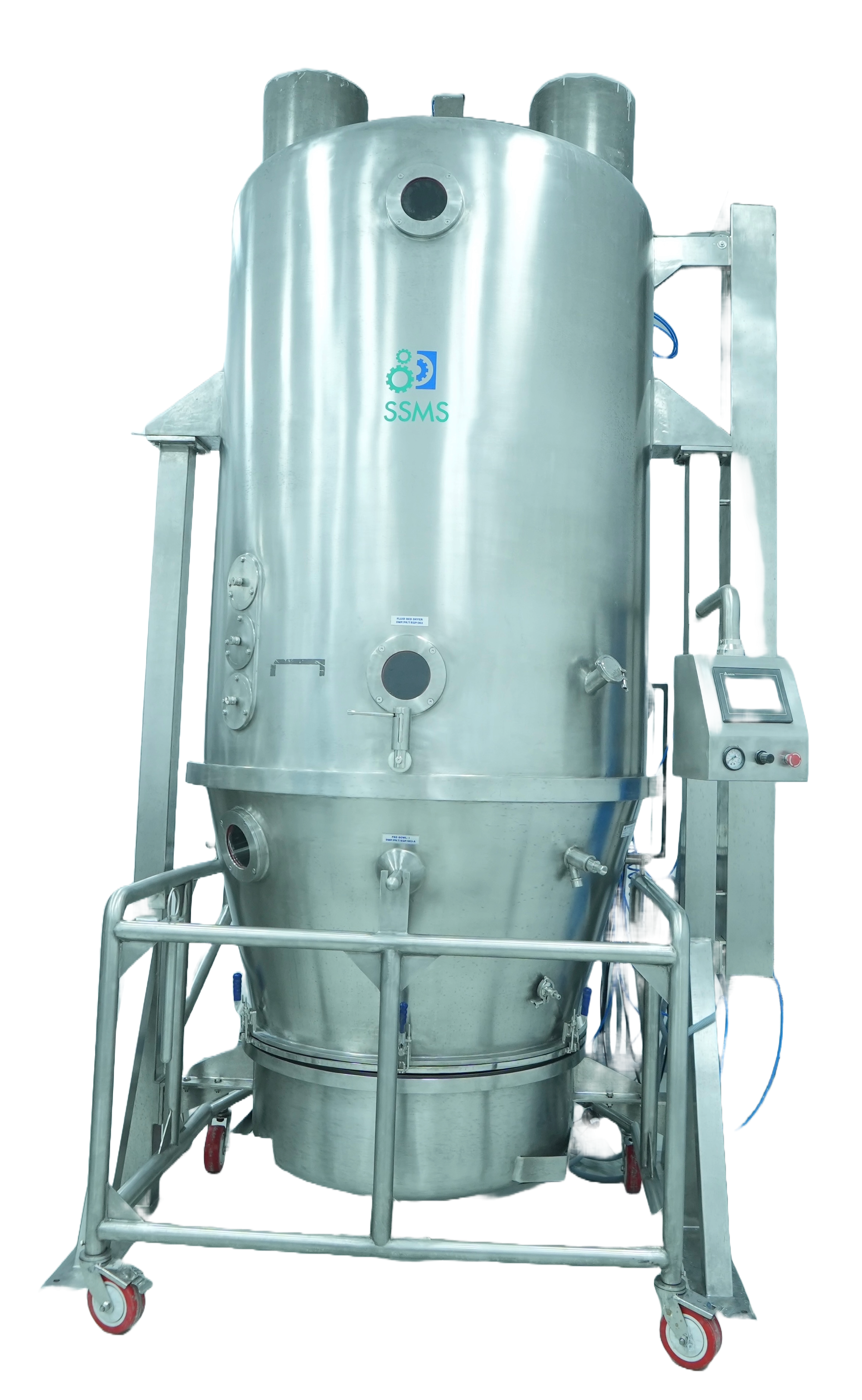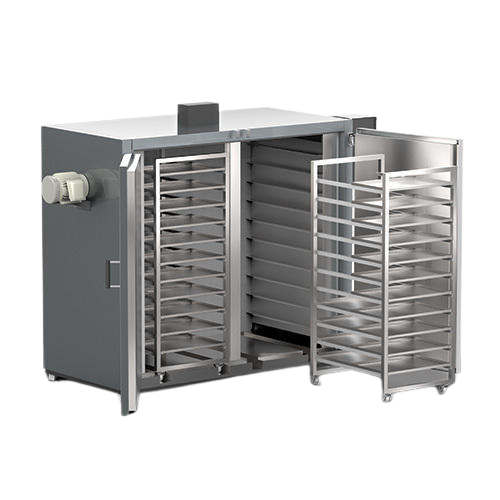
Both machines remove the granulating liquid after wet granulation, and both are common in Indian pharma plants. The difference is how they move heat into the wet mass. A Fluid Bed Dryer (FBD) suspends the granules in a heated air stream so every particle dries at once. A Tray Dryer (TD) holds the granules still on trays in a hot-air cabinet and lets heat work in from the surface. That one difference drives everything else — drying time, moisture uniformity, particle attrition, footprint and cost.
How each one works
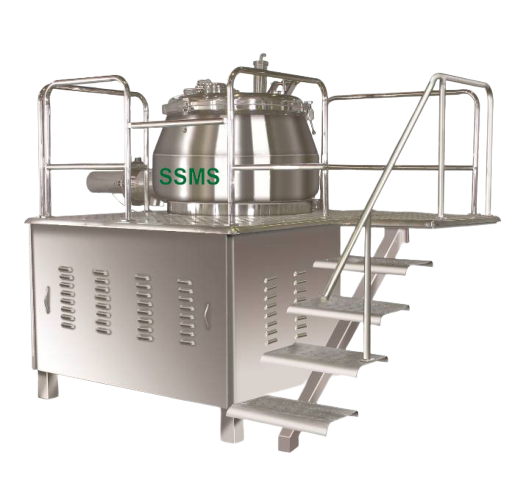
In an FBD, filtered air is heated and blown up through a perforated bed. At the right air velocity the granule bed "fluidises" — it behaves like a boiling liquid, with every particle tumbling in the air stream. Each granule is surrounded by drying air, so evaporation is fast and even. The SSMS Engineers Fluid Bed Dryer uses a retarding-chamber design with dished-end construction, finger-bag or cartridge filters, and a discharge height matched to a Rapid Mixer Granulator so the wet mass transfers straight across.
In a Tray Dryer, the wet granules are spread on stainless trays, the trays go onto trolleys, and the trolleys roll into an insulated cabinet. A fan recirculates hot air across the tray surfaces. Only the top layer of each tray meets moving air, so drying is slower and the tray bottom lags the top. The SSMS Engineers Tray Dryer is offered from TD-12 (12 trays) up to TD-192 (192 trays), single- or double-door.
Side by side
| Fluid Bed Dryer | Tray Dryer | |
|---|---|---|
| Typical drying time | 20–60 min | 4–12 h |
| Moisture uniformity | High — whole bed dries together | Lower — tray-to-tray and top-to-bottom variation |
| Granule effect | Some attrition and fines from tumbling | Gentle; granules undisturbed |
| Throughput per shift | High | Low — cabinet time dominates |
| Footprint | Compact, single skid | Cabinet + trolleys + loading space |
| Capital cost | Higher | Lower |
| Energy per batch | Higher instantaneous load, shorter run | Lower load, long run |
| Cleaning / changeover | Faster, CIP options | Manual tray and trolley cleaning |
| Solvent handling | Needs explosion-relief / inerting for organic solvents | Same requirement, easier to contain |
| Best for | Routine high-volume granulation, tight LOD targets | Small batches, heat-tolerant material, R&D, low budget |
When the FBD is the right call
- You granulate the same products in volume and drying time is on your critical path.
- Your tablet formulation needs a tight, repeatable loss-on-drying (LOD) — an FBD gives a narrow moisture spread across the batch, which stabilises downstream compression.
- You already run an RMG and want granulation and drying to stay a continuous flow with no intermediate tray handling.
- Operator exposure matters: loading and discharge are closed.
When a Tray Dryer still makes sense
- Small or infrequent batches — R&D, pilot, or a product made twice a year — where an FBD's capital cost is not justified.
- Shear- or friability-sensitive granules that would generate too many fines in a fluidised bed.
- Drying materials that are not granules at all: crystals, powders for LOD reduction, wet cakes, API intermediates, in-process samples.
- Budget or utility constraints that rule out the higher connected load of an FBD.
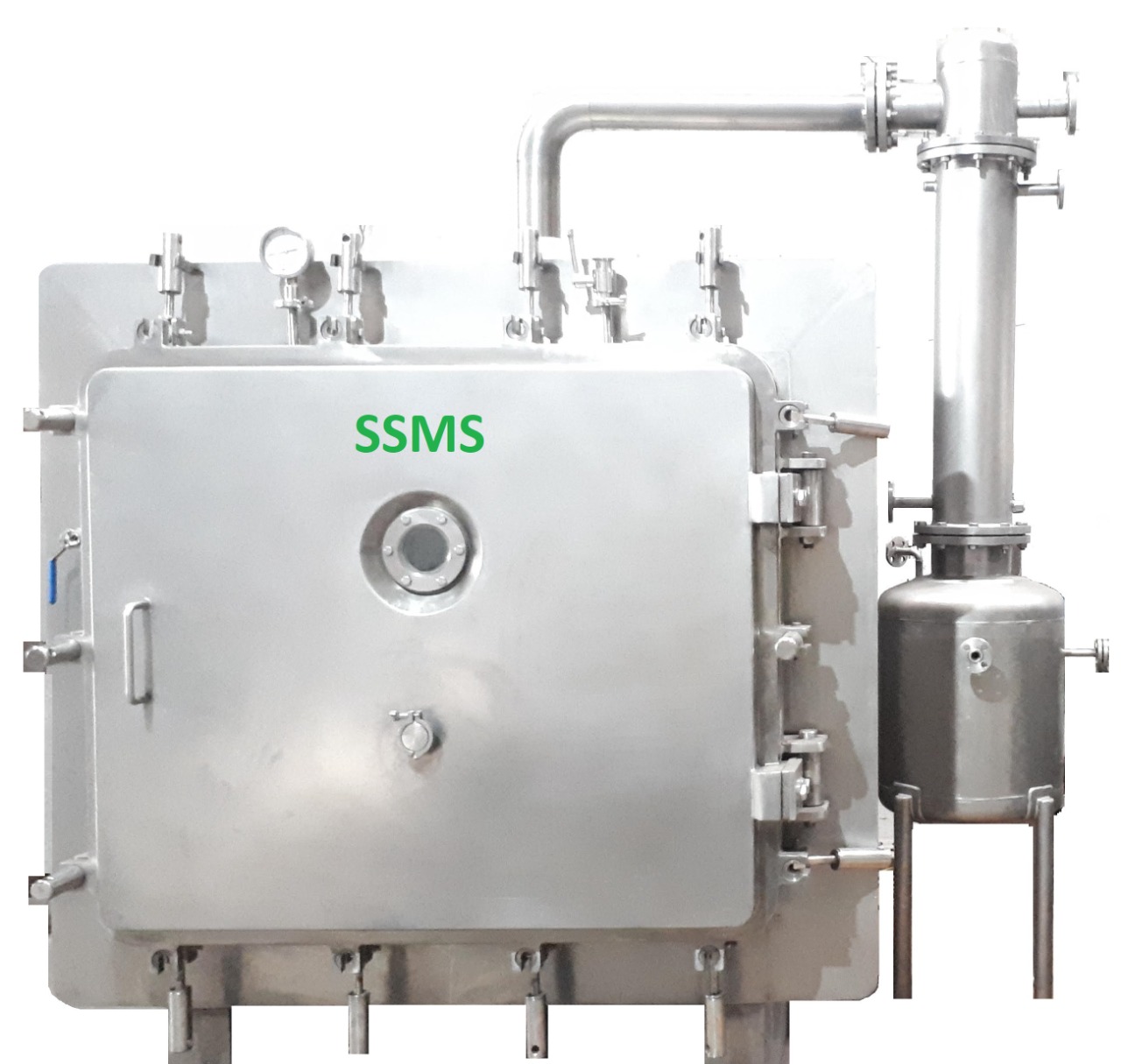
If the material is genuinely heat-sensitive, the better comparison is not TD vs FBD but a Vacuum Tray Dryer, which dries under vacuum at a much lower temperature and recovers solvent.
A practical note on drying endpoint
Whichever route you pick, dry to a moisture target, not a clock. Set an LOD or Karl Fischer spec for the granule, and in an FBD use outlet-air temperature and humidity as the in-process signal — outlet temperature rising toward inlet temperature means the free moisture is gone. Over-drying granules is as damaging to compression as under-drying.
Talk it through with us
Tell us the product, the batch size, your LOD target and whether the active is heat- or shear-sensitive, and we can recommend the drying route and size the machine. Contact SSMS Engineers, or see the full Fluid Bed Dryer specification and Tray Dryer specification.