Short answer: there isn't one. A Rapid Mixer Granulator (RMG) is a high-shear granulator — the two names describe the same machine. The confusion is worth clearing up, though, because the real decision a formulation team makes is not "RMG or high-shear mixer" but "which wet granulation route suits this product": high-shear, low-shear, or fluid-bed.
Why the two names exist
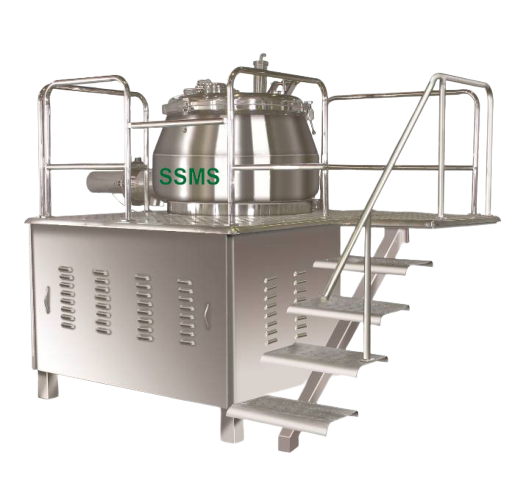
"High-shear mixer granulator" describes how the machine works. "Rapid Mixer Granulator" is the name that became standard in the Indian and wider Asian pharma industry for the same equipment. You will also see "high-shear mixer" (HSM) and occasionally "high-shear wet granulator" (HSWG). All of them mean a closed bowl with:
- a main impeller at the bottom that mixes the dry blend and distributes the granulating liquid, and
- a chopper (a smaller, faster blade in the bowl wall) that breaks down oversized lumps and controls granule size.
The SSMS Engineers Rapid Mixer Granulator uses a three-blade impeller together with a chopper, with all product-contact parts in SS 316 and a pneumatically operated, interlocked discharge.
High-shear granulation, in one paragraph
The dry ingredients are mixed in the bowl, then the binder solution is added while the impeller turns. The impeller's shearing action wets the powder mass evenly and works it into dense granules; the chopper trims the size distribution. Because the energy input is high, the process is fast (typically minutes) and produces dense, low-porosity granules with good flow — well suited to high-speed tablet compression. The wet mass is then discharged, usually straight into a fluid bed dryer to remove the granulating liquid.
How it compares with the alternatives
| High-shear (RMG) | Low-shear (mass mixer / planetary) | Fluid-bed granulation | |
|---|---|---|---|
| Granule density | High | Low–medium | Low (porous) |
| Batch time | Short (minutes) | Longer | Longer (granulate + dry in one unit) |
| Granule flow | Good | Variable | Good but friable |
| Best for | High-dose, high-speed compression, robust processes | Simple wet massing, effervescent, some nutraceuticals | Moisture- or shear-sensitive actives, capsule filling |
| Equipment footprint | RMG + separate dryer | Mixer + separate dryer | Single unit |
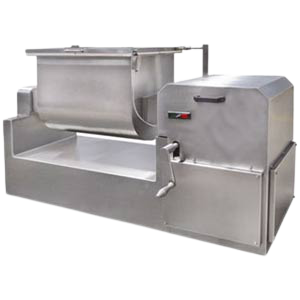
A Mass Mixer applies far less shear. It is a good fit when the formulation only needs gentle wet massing, when the active is shear-sensitive, or for products like effervescent blends where a dense granule is not wanted. It is generally slower and gives a less uniform granule than an RMG.
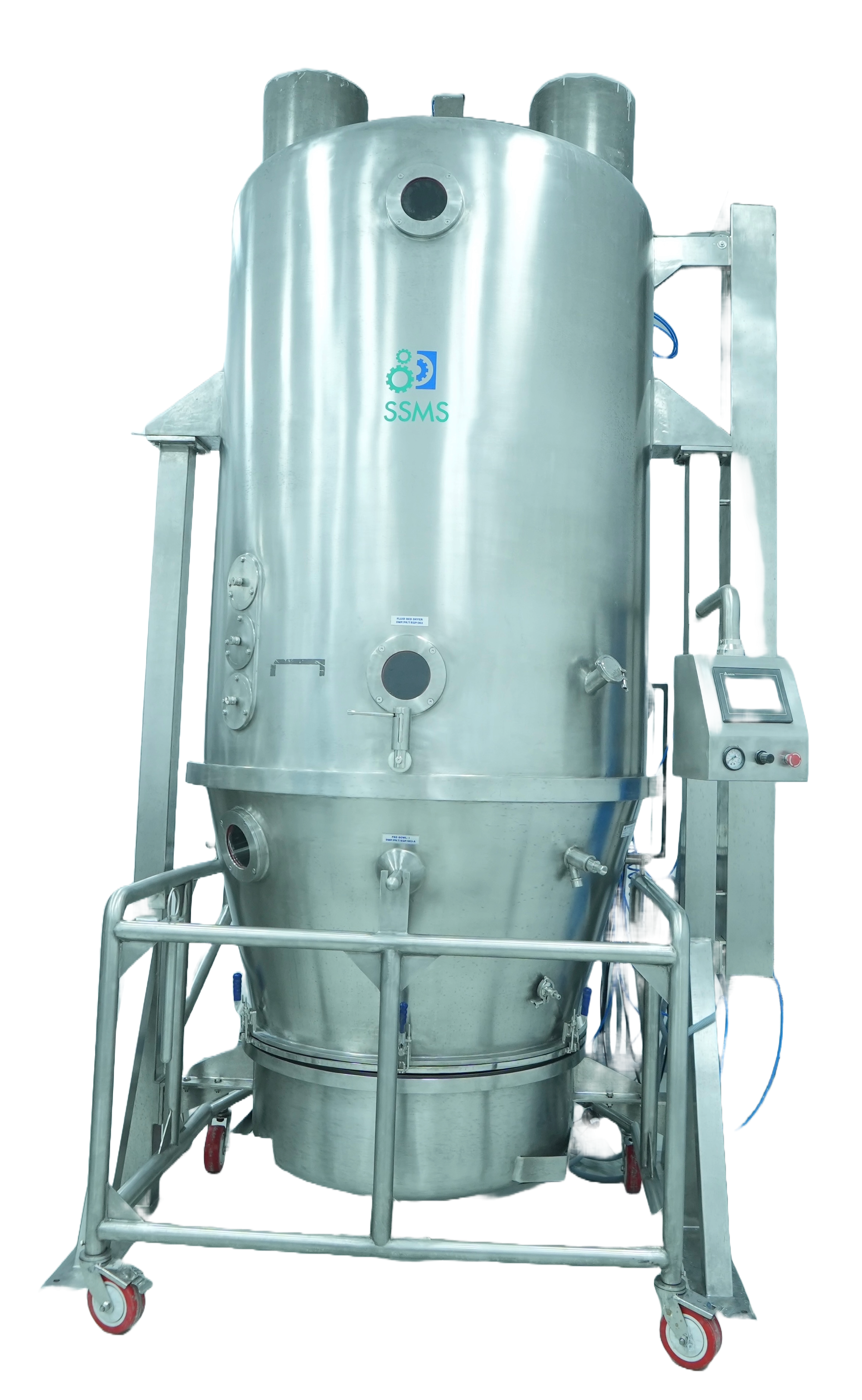
Fluid-bed granulation sprays binder onto powder that is suspended in an air stream, producing light, porous granules and combining granulation and drying in one machine. It is the usual choice for shear- or moisture-sensitive actives, but the granules are more fragile and the process is more sensitive to air-handling conditions.
Choosing between them
Reach for a high-shear RMG when:
- you are compressing at high speed and need dense, free-flowing granules;
- the active is not shear-sensitive;
- batch time matters and you want a tight, repeatable process;
- you already run, or plan to run, a fluid bed dryer downstream — the SSMS Engineers RMG discharge height is matched to the FBD container so the wet mass transfers without an intermediate step.
Consider low-shear when the formulation is simple, the active is delicate, or a porous granule is acceptable or preferred.
Consider fluid-bed granulation when shear or localised over-wetting is a real risk, or when combining granulation and drying in one unit is worth the trade-off in granule strength.
Talk it through with us
Granulation route is a formulation decision as much as an equipment one. If you tell us the dose, the active's sensitivity, your compression speed and your target batch size, we can advise on the route and size the equipment. Contact SSMS Engineers or see the full Rapid Mixer Granulator specification — lab scale to 600 L.