Both machines coat tablets the same way: a perforated or conical pan tumbles the tablet bed while a spray gun applies coating solution and hot air dries it in place. The difference is how much of the process is automated — discharge, airflow control, emissions handling and changeover — and that difference tracks batch volume and budget more than it tracks coating chemistry.
How pan coating works
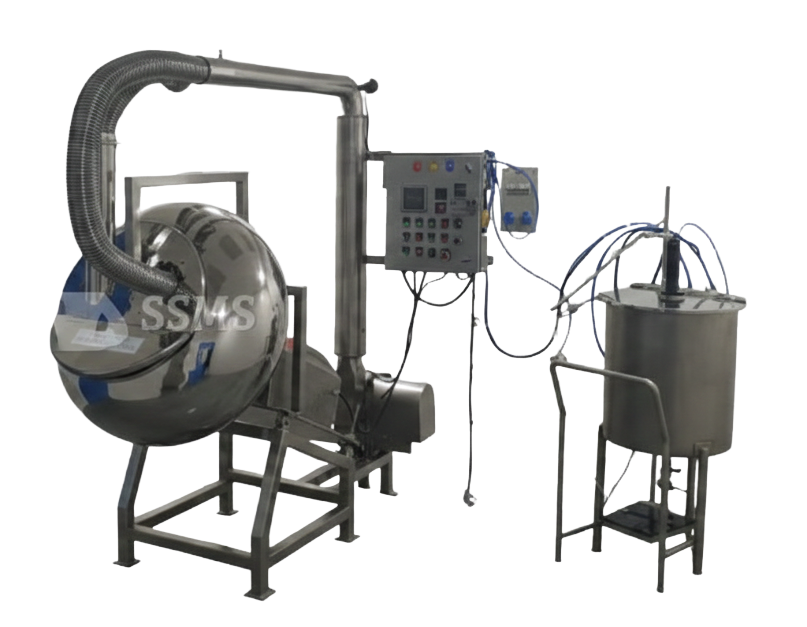
Tablets load into a rotating pan. Mixing baffles or a criss-cross pan geometry keep the bed tumbling so every tablet passes through the spray zone repeatedly. A spray gun applies film or enteric coating solution in controlled bursts while heated air, drawn through the perforated pan wall, evaporates the solvent between passes. Pan speed, spray rate and airflow are tuned together so the coating builds up evenly without tablets sticking (twinning) or the coat cracking from drying too fast.
Side by side
| Autocoater | Conventional Coating Pan | |
|---|---|---|
| Pan sizes | 10"–66" (7 models) | 12"–60" (6 models, interchangeable inserts) |
| Batch range | 0.5 kg – 400 kg | 2 kg – 200 kg |
| Pan speed | 1–20 rpm via VFD | 2–28 rpm via VFD |
| Discharge | 100% automatic, no tools | Pneumatic auto-tilt |
| Heating | Hot air with pneumatically controlled inlet/exhaust dampers | Built-in electrical heating — no steam line needed |
| Exhaust / emissions | Wet scrubber at exhaust | Connects to the facility's dust-extraction system |
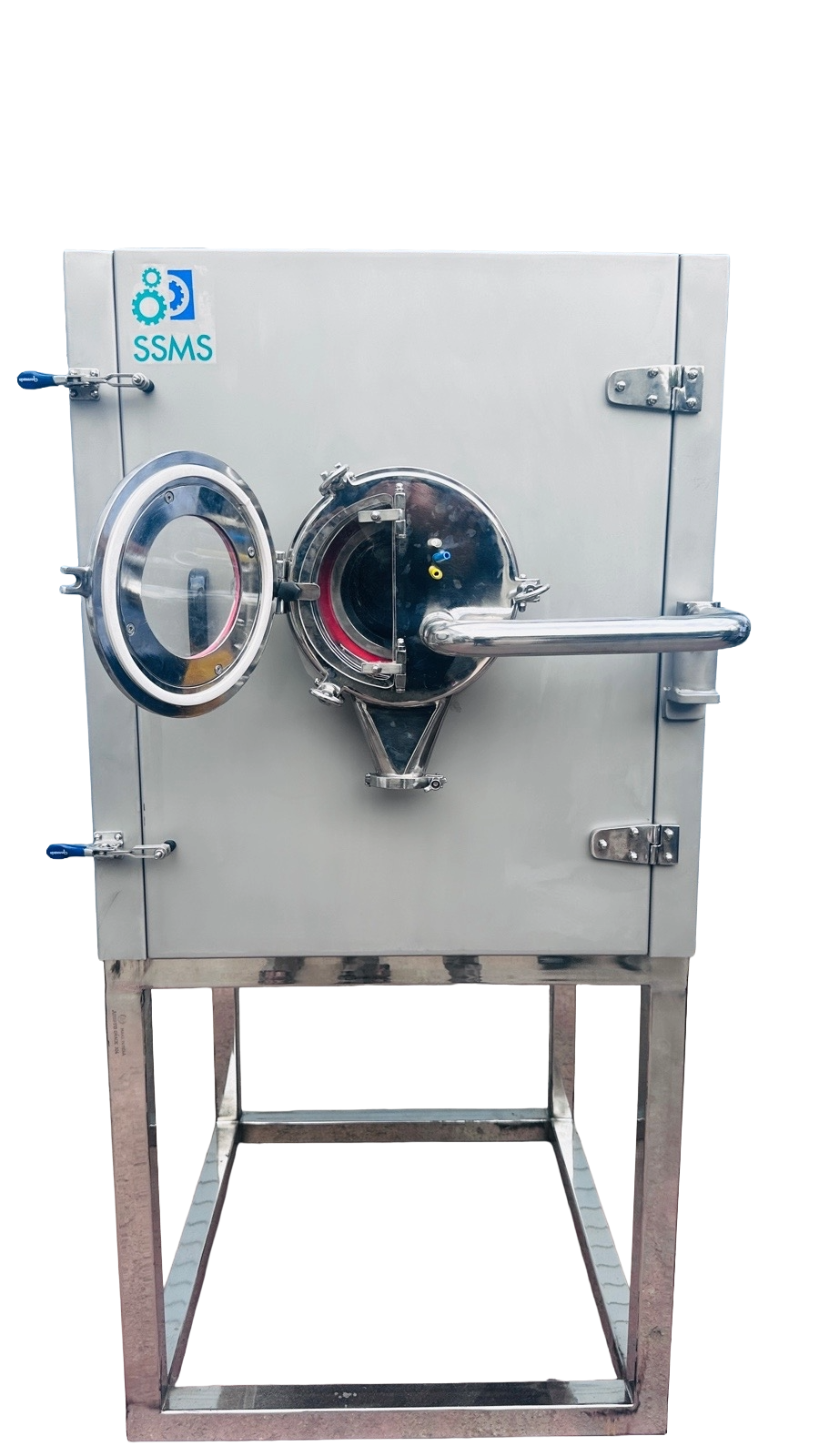
| Construction | Flameproof | GMP steel, motor mounted externally |
| Spray guns | Anti-breeding Spray Tech/PSS guns, quick-connect for changeover | Positioned spray ports, standard mounting |
| Best for | High-volume routine production, film and enteric coating on one machine | Lower capex, R&D/pilot batches, flexible pan-size changeover |
The SSMS Engineers Autocoater and Conventional Coating Pan are both offered lab scale to production scale, so the decision is rarely about whether a size exists — it's about how much automation the batch volume justifies.
When the Autocoater earns its cost
- Batch volume is high and repeatable. 100% automatic discharge and quick-connect spray guns remove the manual steps that dominate changeover time on a busy line.
- You run both film and enteric coating. One pan geometry, with pneumatically controlled dampers between inlet and exhaust, handles both without swapping equipment.
- Emissions matter. The wet scrubber at the exhaust is built in, rather than something you retrofit onto a facility extraction line.
- Operators need visibility, not intervention. An integrated LED light and automatic control of spray timing and airflow are meant to hold batch-to-batch consistency without manual adjustment mid-run.
When a Conventional Coating Pan still makes sense
- Capital budget is tight, or the line runs a modest number of batches — the built-in electrical heating and VFD drive remove the need for a separate steam line and external drive, keeping installation simple and cheaper.
- R&D and pilot batches, where a 12"–24" pan with interchangeable inserts covers a wide range of trial sizes on one frame.
- The facility already has dust extraction to connect the pan's built-in collection port to, and doesn't need an in-pan scrubber.
- Coating quality with a well set up conventional pan is not inferior — you are trading automation and throughput for cost, not trading away coat quality.
Don't forget the dust side
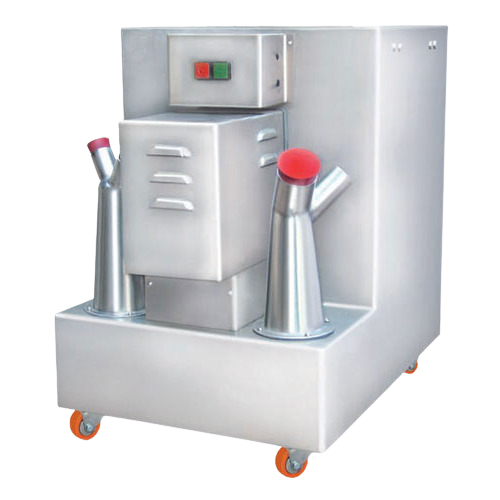
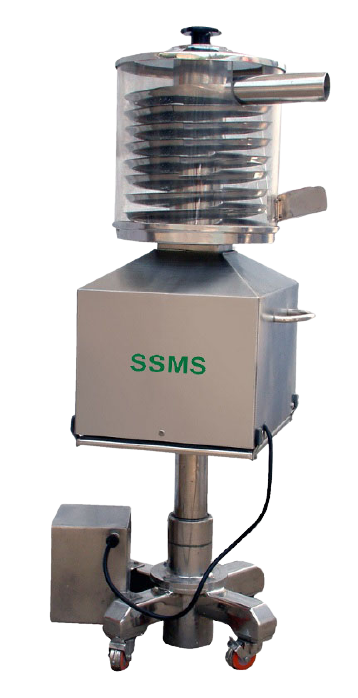
Coating sits between two dust-generating steps. Tablets arriving from compression carry surface dust that should be removed before coating so it doesn't get sealed under the film — a De-Duster handles that in-line. The coating pan itself, and the facility around it, need extraction: a Dust Extractor connected to the pan's collection port (or feeding the Autocoater's scrubber) protects both product quality and the room.
Talk it through with us
Tell us your batch size, whether you run film, enteric or both, and your automation and emissions requirements, and we'll recommend the pan and size it. Contact SSMS Engineers, or compare the full Autocoater and Conventional Coating Pan specifications.